🎥 Watch the video version here
Full transcript below
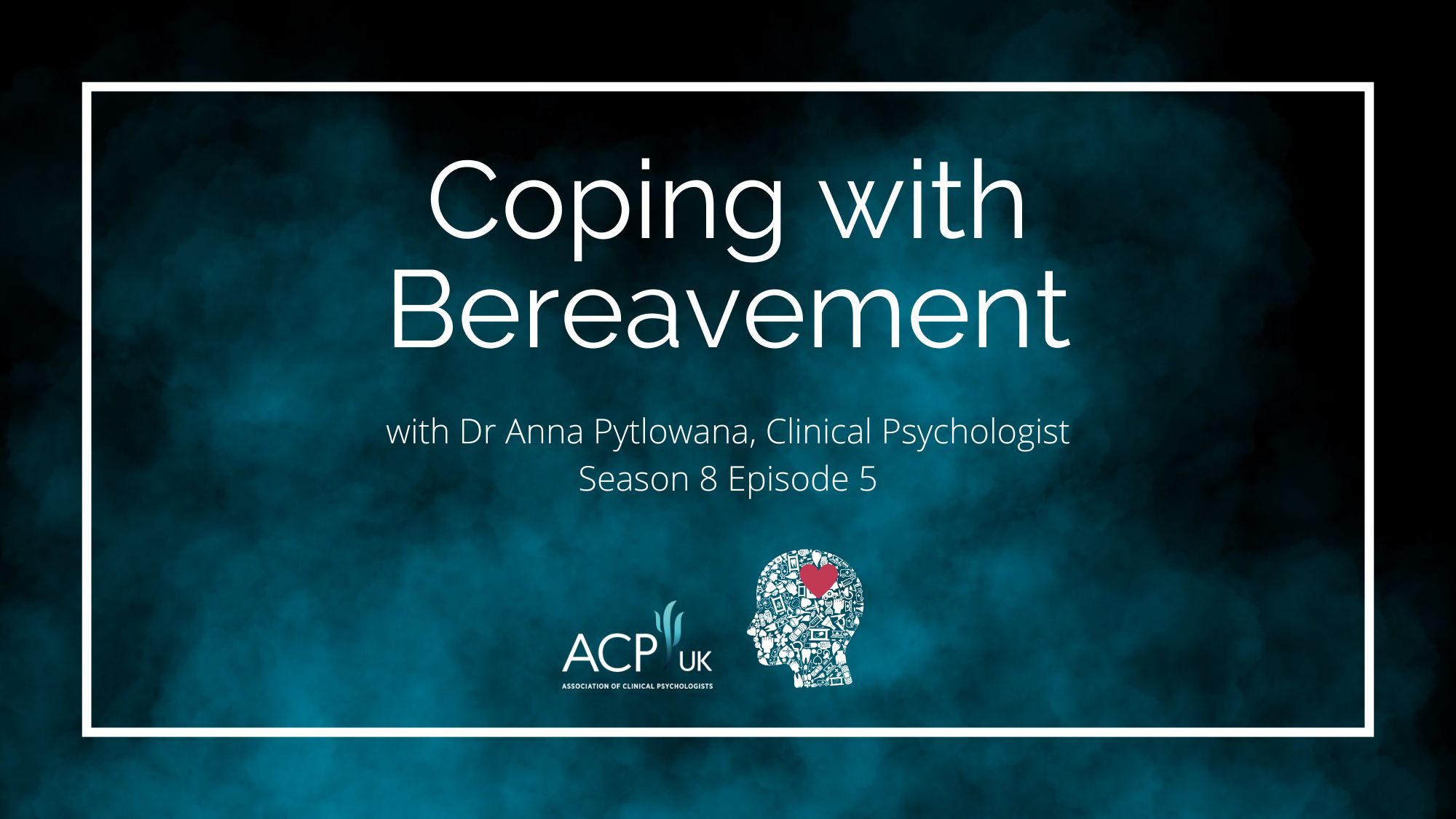
In this episode of When Work Hurts, I’m joined by Dr Anna Pytlowana, Clinical Psychologist and author of Coping with Bereavement, to explore the deeply personal experience of grief and loss, and how our experiences of bereavement can shape both our personal and professional lives.
Anna shares the experiences that led her to write the book, and we discuss the individual and ever-changing nature of grief, including how our relationships, identities and cultural backgrounds influence the ways we mourn and remember those we have lost. We also explore the importance of connection, community and rituals in navigating bereavement.
Our conversation considers the particular challenges faced by those working in helping professions, including what happens when our own experiences of loss intersect with our professional roles. Anna reflects on the importance of self-compassion, boundaries, supervision and allowing ourselves to be vulnerable, rather than feeling that we must always be the person offering support.
We also discuss practical psychological tools and resources for coping with bereavement, alongside some of the bigger questions that grief can bring up about mortality, ageing and what matters most in our lives.
Useful links:
I’d love to connect with you so please come and say hi on LinkedIn or via my website.
The Coping With series is available via Sequoia Books and Routledge. ACP-UK members receive a discount on all ACP-UK titles – details are in the monthly members’ newsletter, The Buzz.
Do check out the ACP-UK and everything it has to offer.
Follow and subscribe so you don’t miss an episode!
Transcript
Paula Redmond (00:04)
Hi, I’m Dr Paula Redmond, and you’re listening to the When Work Hurts podcast, which is brought to you by the Association of Clinical Psychologists, the representative professional body for clinical psychologists in the UK. In this series, I’ll be exploring the intersection of the personal and professional through conversation with clinical psychologists who have written about challenging life events and circumstances that they faced in the Coping With book series. We’ll be thinking about how these experiences affected them as professionals and how their professional roles and identities have intertwined with these challenges, as well as the wisdom, expertise and guidance they’ve shared with readers.
In this episode I’m joined by Dr Anna Pytlowana, clinical psychologist and author of Coping with Bereavement. We explore the deeply personal nature of grief and how our experiences of loss are shaped by our relationships, identities and cultural contexts. Anna reflects on how her own experiences of bereavement have influenced her professional life, including the importance of self-compassion, boundaries and allowing ourselves to be vulnerable.Anna started off by sharing how her books journey began.
Anna Pytlowana (01:26)
My journey with my book started right after I qualified as a clinical psychologist in 2020, where a call came out from the ACP UK to say, here is what we’re thinking of doing. And at that point I have already had therapy from a clinical psychologist, a very experienced clinical psychologist (waving hello at her, if she happens to listen to this), which was centred around my lived experience of grief and bereavement. And I guess we will get into it all. There was a big part of me that wanted to give back based on my journey and my learning, and kind of to rewind to early in my life when my bereavement happened. I was in my mid-20s when my dear dad suddenly died and at the time I really didn’t have many words to describe what I was thinking, feeling, doing around it. There were lots of layers of my story to date, my journey to date that really came to the surface, lots of facets of me and my identity that suddenly were thrown up in the air and I found myself questioning a lot, including my relationship to my profession at the time. I was an assistant psychologist and just how I viewed myself and my role towards the society whilst facing the shock, the numbness and the sudden nature of my dad’s death.
Paula Redmond (03:26)
Yeah, and yeah, as you say, we’ll kind of unpack that a little bit more as we go through. But I wonder if maybe we could just start by just outlining the book and what you’ve put together in the book. How would you describe what people can expect from the book?
Anna Pytlowana (03:51)
Yes, of course. So it is a self help book. I guess it’s relatively or somewhat unique in that it brings in my training and expertise and and the research that I’ve done on the topic together with my lived experience and I really want to say early on that a lot of what I write about I didn’t find myself able to use at the time when I was really in the midst of my own grief and my own my own process. I really want to normalise that. So it’s certainly not, here is how you fix how you feel, here is how you get away from the pain or the tricky emotions that you’re feeling. I guess that overall, a more kind of lens through which I’ve approached the book is to help the reader to get to know their own process, their own experience, their own state of mind, their own history, which might be informing what’s going on for them at the moment, and only from there be able to facilitate, I guess what I refer to as processing, as psychologists, we use that word a lot, I think ultimately what I mean by that is feeling resourced enough to be able to sit with what is, as opposed to try to distract, try to get away, try to change, try to fix. I think the quote that I’ve come across while writing the book that has really stayed with me the most and I’ve repeated so many times since to others is that grief and bereavement is as individual as our fingerprint. And in addition to that there is this, there’s this sense of it being dynamic, it’s an ongoing journey. And so if readers pick up the book today versus a year from now, my sense is that the book will probably be serving them differently, and and rightly so. It’s about making it our own as we walk, as we walk the journey of bereavement and life overall.
Paula Redmond (06:21)
Yeah. And I was, it was really helpful. I resonated a lot with the book. I’ve had some really profound losses myself in the last few years. So it was very, felt really relevant reading it. And I think, yeah, helpful to sort of, I think what you do is kind of have an initial sort of talking about your story and kind of framing grief and, you know, the experience of loss. And then you also touch on some really specific contexts that are helpful in terms of thinking about parenting, suicide, kind of a migrant experience, which was really interesting because I’m also a migrant and hadn’t kind of thought about that angle before. So that was really interesting. Thinking about, you know, that migration as being a loss, you know, profound loss often for people, in and of itself and yeah, how those experiences intertwine with death. And then also a chapter about being a helping professional. So I think that’s also really interesting to kind of frame it around those specific contexts, which is also really helpful and what might be similar and different in those experiences.
Anna Pytlowana (07:43)
Yes, I, while listening to you I just realized yet again just how much the book managed to cover from different angles and I think bringing in my lived experience which I kind of, it is the thread throughout the book. The identity of an immigrant and the identity of a helping professional really came to the surface for me, as I mentioned earlier when Dad died, and kind of attending to both of these factors separately with time and in hindsight, what was really helpful and when writing the book, what was really helpful is thinking about John Burnham’s and colleagues concept of social graces. So yeah, this variety of descriptors that us, as well as the society around us tends to use to make sense of us and work out which boxes we might belong in. The alternative or parallel concept is that of cross sectionality. And I think at the time living in London, having moved to London from a small village in Poland, I think so much was being questioned by me anyway, you know, that stage of development between the age of eighteen when we become an adult, whatever that means, we could debate that as well, all the way to the age of twenty six when when Dad died. You know, what it means to be a female, to be white, to be Eastern European, to be Polish, to be coming from a Roman Catholic country, at not identifying as Catholic or religious for that matter, you know, navigating questions around sexuality and ways of of dating and kind of connecting to the society. And in all of that what was thrown in very suddenly is the concept of death and human mortality. So that was a lot. And then alongside that, the story of wanting to become a psychologist. And I wonder if your listeners will find themselves nodding a lot if they’re in any other helping profession, this kind of frequent, it’s not always the case, but frequent theme of quite early in life realizing, I think I’m kinda good at helping others. I think this feels nice and I think this might be increasing or preserving connection to others and it helps me to feel that I’m good at something and I’m wanted and I’m needed. So for me I announced at the age of seven that I wanted to become a psychologist and to my family’s amusement, which maintains to this date, I couldn’t quite say the word psychologist in Polish properly. So I twisted it and that stuck. and I think of course everyone’s story is different. I think I thought a lot over the years about the Jungian idea of a wounded healer and what it is that might be making us gravitate towards helping others as a profession. So then, fast forwarding to me being twenty six in a very competitive, at the time, career of being an assistant psychologist and working really hard to try to secure a doctorate place to be able to qualify as a clinical psychologist. I’m fairly adamant that looking back I was firmly situated in the idea of rescuing others, and my entire purpose in life being helping others. So then learning about my dad’s death from that positioning was really, really tough because, you know, whichever framework we look at from, my mind, my nervous system, my psyche needed nurture, connection, slowing down, time in. Yet intellectually I was working really, really hard to ignore that, to push it down and to push through it in order to continue to show up at work and stay in the default of what I knew about myself from very early in life in life, which was to help others, whilst I myself absolutely needed help and connection and support at the time.
Paula Redmond (12:39)
Yeah, one of the things that I’ve thought a lot about since my mum died was this, this sense of this being a universal experience. One of the only things we can probably, you know, unless you die very young, you know, we can kind of guarantee that it’s something we’re going to share with people. It’s a really universal experience more than anything else. And I had never kind of clocked that, weirdly, probably because I was lucky enough to be in my 40s before losing anyone very close to me, grandparents even. So, but I also remember that sense of the sort of devastation that followed. And you describe it as, in your book as well, the kind of like confusion. I had expected sadness, but I hadn’t really expected the cognitive shutdown and confusion and fatigue and the unreality of it to go on for so long. I remember really being like, wow, how does the world function if this is such a common experience for people in one way or another, at any given moment, lots of people are going to be holding grief. And how do things work? It was kind of amazing to me that, you know, things… there were shops to go to and stuff happening and when humanity holds so much suffering.
Anna Pytlowana (14:25)
Well yes. Thank you for sharing, Paula. Noting really wanting to say, like I am going to say I’m sorry to hear about your loss. And also alongside that this kind of sense off most of us will be touched by this at some point. And I think even in the social exchanges and pleasantries around grief and bereavement, this at least in my lived experience, there’s been this sense of goodness, that’s all this kind of huge shock and surprise that somebody in my family or in my circle died. And I think that that speaks to what you’ve touched on there, the the kind of problematic, I’d say, avoidance and taboo of the topic of human mortality.
Paula Redmond (15:20)
And it’s something I think you grapple with as well. What does it mean to cope with profound loss? Like, what does that look like? How do we know if we are when really it’s, you know, an experience of pain and suffering that is important. Yeah. I’d be curious to hear a bit more about your thoughts on that, this idea of coping with loss.
Anna Pytlowana (15:51)
Yes. Thank you for that. And it was really important to me to dedicate a chapter to that and to touch on it at various other points in the book because, and this I absolutely include myself in this, this isn’t about us and them. You know, this idea that I held for a long time and it comes up for me a lot today to this idea of “and now I need to get to a hundred percent functioning, delivering, producing, you know, creating results, being useful, doing, doing, doing” without being too political about it. You know, the I guess, the industrial revolution, you know, this this idea of kind of you know, the capitalist society that we live in where emphasis on work and productivity and working hours and bums on the seats, kind of all of that is just, it’s just so far removed from the reality and the nature of of grief and emotional pain. I know that in the book I touched on compassionate leave and just how painful a read and realization it was for me to really consider how compassionate leave policies tend to be written, you know, the assumption is if it’s a blood connection and if it’s a very close one, however we define that, because of course everyone’s family dynamic and social structure and support network and who they call their family will be different. To somehow quantify that to a number of days during which one is allowed to not show up at work in order to do whatever it is that they’re expected to do in a week or two, to then come back what, fixed? As though it’s not happened, come back the version we were before the bereavement occurred, none of which again is realistic, helpful, healthy or compassionate, in my view. And I was just thinking it for me was this it was also this kind of slow motion sensation, like I was in a weird film or a dream and it was happening so slowly. I couldn’t quite get from one place in the office where I was trying to show up to the other. And there are different ways of making sense of that, I think, you know, going back to coping, I remember sitting down at my desk and kind of trying to figure out what my list of tasks was and suddenly bursting out crying. And the more I practice clinical psychology and the older I guess I become and the more I read, I tend to be a curious cat, especially in the summer. I tend to wake up at silly o’clock and read all sorts. I find myself thinking more and more about the wisdom of the body and the prefrontal cortex not really being always that useful to us when the instinct to cry, to be slow, to hide, to make our body smaller comes in. You know, that takes over. So I needed to burst out crying to then consider, or maybe I shouldn’t be at work. And again, with hindsight, to me, noticing those tears, allowing those tears to come and talking to someone about what happened in my private life in order to have some time out or time in, depending on what, how we define that or how we look at it, was coping. It was making space for noticing, naming and sitting with what was at the time. Having this conversation with you is part of my coping because I am connecting with you. I am expressing where I’m at with my grief and bereavement. I’m hearing your experiences, you know, that sense of one nervous system with another is huge. And in the book, I do touch on pre-industrial revolution, you know, non Western, kind of more tribal, collective ways of being with others, including various generations and that kind of wisdom that is passed down. Not to mention what in the Western science we tend to refer to as polyvagal theory these days, you know, ideas around kind of movement and chanting and rhythm, dance and all of that being, having this potential to soothe and regulate, especially when we do these things collectively, you know, in that kind of ceremonial, ritualistic way. To me that’s also coping. And at the time when I found out, you know, I kind of felt so far away from home. I was in London and my Dad died back in Poland where he retired too in a very restless way, wanting to find new jobs and things to do, including becoming a university lecturer, bless him, while trying to retire. That was just him through and through. And suddenly I felt whilst I loved London so much, I felt so far away from home. And at the same time, this idea of going back to the village where my parents house is and where dad died, I also didn’t quite have a sense of a connected community where I could take my pain, where I could express my pain. When I returned to Poland after my dad’s death, I was faced with religion, which didn’t quite correspond well, didn’t correspond with me at all. And so whilst I respected those rituals, they didn’t quite… I wasn’t able to draw on that to be able to sit with and process my own experience. And there also wasn’t a sense of collective crying, grieving, sitting with, you know, how I understand my culture of origin. You know, a lot of that is actually to do with stoicism and being quite serious and keeping emotions behind the closed doors and kind of showing up to the mass and the funeral and letting it all happen while wearing a black outfit and then going back home to do who knows what in order to then continue to function and show up at work. So I really wanted to hone in on that in the book as well, that actually facing bereavement can, it makes it so likely that all these questions of belonging and community and sense making of our existence, of our mortality, ideas around our value, is it about doing, is it about producing? Am I valuable if I just am? If I’m not doing much, if you like, is that okay? All of that comes to the surface. And so some of the worksheets, particularly in the chapter around my immigration story and the identity of an immigrant lend themselves quite well to that, I think, just really pausing to think about what are my resources in terms of how the society classifies me in different ways, or I choose to classify myself, and where are the kind of barriers and blocks and how can I work around them to be as authentic to myself, I think, is is an important word here, as possible to walk my own path of bereavement in a way that is most meaningful to me. Which just to give an example, for me, it hasn’t really been about going to my dad’s grave. And it’s been a process and several times where I’ve visited Poland I wasn’t able to, you know, step past the gate of the cemetery. Now I can. But actually for me, just to kind of validate, you know, we’re all unique and it’s about doing things our own way and walking bereavement our own way. I feel much more connected to my dad right now than I would if I suddenly found myself in front of his grave. Yeah. And I just noticed we both took a breath. And I think that’s wonderful, this idea of sitting with our nervous system and our and our bodies and our bodily wisdom. So yeah, thank you for sharing that breath with me.
Paula Redmond (23:34)
Yeah. And I think what’s tricky, especially thinking about us as helping professionals is that our own way of being and working through grief and bereavement may not sit well with the requirements of our profession, our job plans, our contracts, and how, as you said before, even the idea of how do you quantify passionate leave, you know, how much time is in now. When I lost my mum and my grandparents, I was in private practice at that point. My mum was always a very organized person. You know, her death was very unexpected and not, you know, so I’ll say this tongue in cheek, but I have, since I started private practice, taken August off and she died on the 31st of July. So I had this gift of not having to even have an argument with myself about what time was going to be taken. I had a whole month to even, you know, not have to worry, which was an incredible gift. But I can imagine how much harder that would have been to even answer the question of how much time do you need? And, you know, that comes up in some of our psychology kind of Facebook groups, like how much time do I take? You know, what, that is so difficult. It’s so difficult. People, you know, even taking time when they’re sick, people struggle, you know, letting colleagues down, letting systems down, people waiting, you know, we working and really with vulnerable people or. Yeah, it’s really tough to take care of ourselves. Like, you know, I think there’s one thing about, you know, embracing that for ourselves to give space to ourselves, but being able to kind of find our way in systems to take what we need is really hard.
Anna Pytlowana (27:43)
It really is. And for your listeners who can’t see us, I found myself nodding a lot as you were talking just then. And I also want to say, thank you for sharing something about your mum. It’s lovely to hear a bit about the personality and the organization skills there that you were smiling about. There’s a lot there. I think, you know, some of the discussions about the culture of the NHS, which I have so much respect and appreciation for. You know, the NHS is what gave me my profession. It is what I have had treatment from for various things over time. Didn’t need to pay a penny. You know, it’s huge and it’s something that I, you know, the pride about the NHS has been palpable to me over the years as an immigrant. And also alongside that, this idea of being an NHS hero or an NHS heroine. My goodness, that fed my early life emotional coping strategy of being useful and serving others so much and continues to. I do try to hold on to the importance of and I’m just pausing because I really don’t want to come across as preachy or prescriptive. For me what’s been important in my practice is to be reminded by really helpful attuned supervisors and to hold on to this myself too, that our clients, our families that we serve, our service users are not fragile. There is vulnerability that they bring into the therapy space, yet they also have their own resources. And alongside that, my personal and professional view that developed over time and continues to is that we are not as therapists, as mental health workers, as helping professionals of any kind. We’re not in a position to rescue people. We can be alongside them, we can witness, we can co-regulate, we can validate, we can interact with them from a compassionate place, you know, this idea of sensitivity to suffering and the commitment to, I would say, support alleviating that suffering in good time. All of that is a possibility. Yet we can’t rescue people. And for me that’s been incredibly important. and it’s helped over time and continues to, with various results, to be able to say no, to be said to be able to say not yet, to be able to say I can’t. And if any of my colleagues or supervisors are listening, they might be shouting at their, the podcast device going, no Anna, you need to get better at saying no, you always say yes and I want to name that too because it’s a journey. But there’s something there and you know in the chapter about being in a helping profession, I do bring in the the analogy or the metaphor of Kinsuki, which is the Japanese art of ‘piecing together what’s been broken’ in inverted commas and I emphasise the inverted commas, in order to find something even more unique and precious and long-lasting. And I prompt the reader to think about what it is that their Kinsugi glue consists of. And for me a lot of it is that, you know, it’s to be able to kind of zoom out into the bigger picture and see myself as one particle in the universe who has good intentions and some skills and some training, and who also needs to continue to be humbled by her own humanity, her own nervous system, her own limitations, and her own needs. And it’s only with that that I can be useful to anyone else. And you know, that theme of being useful is so strong for me. You know, when Carl Jung describes the concept of the wounded healer, he emphasizes the importance of doing our own healing if we are to support not deliver but support anyone else’s healing. And it’s tough within the NHS context because of this this understandable pride and this kind of collection of colleagues who very often draw from that kind of very early theme and drive a need to serve others, to give to others, to be useful for a variety of reasons. We all have our own stories. And I guess imagine and to a tiny extent know that in private practice it comes up too and maybe even more so because often we might feel that we’re working in isolation that it is just us that this person is only able to be vulnerable with us or bring this stuff to us. And I think whilst it’s so important to hold on to the value of therapy and what we offer us, if I stay with with the profession of clinical psychology for a moment, it is yet again about being able to zoom out and kind of this this h humbled position of people having a variety of resources around them and us not being the only means, if you like, not not to mention the wonderful opportunity to model what it is that we preach to people time and time again, or I at least do, you know, the importance of self-care and of slowing down and connecting and of wellness and finding space and time to express emotions and holding a very healthy work-life balance, you know, all these things. Actually, for someone to see all. The therapist I’m in therapy with has just emailed saying she’s had a significant family development and so the next session will be in four weeks’ time. Interesting that she’s doing that for herself. You know, often, well not often, I guess I’m quite cautious in, I say this having written this book, I was going to say I’m quite cautious in what I share with my clients in the therapy room. You know, as you all know, Paula, we’re trained to kind of pause and think, is this self-disclosure going to be serving my client? Or am I in some kind of semi-conscious or unconscious way trying to meet my own need here? There have been a few times where I’ve shared with my clients that I have accessed therapy myself from a clinical psychologist. And so far, without a fail, every single time I see this kind of shock and surprise. People really pause and go, Huh, you needed this too? You struggled with something as well. So and of course in the book I own it much more, you know, I describe all sorts of ways in which I was trying to navigate my pain, including yelling at a receptionist at my GP practice, because they were just not getting what it was that was going on for me. It’s so important to own our humanity in our work, and I would say more so when we are in helping professions ourselves.
Paula Redmond (35:59)
Yeah. And I think there’s something about that. You’ve talked about supervisors and I guess that feels really important being able to have, you know, the wisdom of others in helping us discern what we need, whether that is supervision or therapy, you know, friends in terms of some of those practicalities around taking time off, around rethinking caseloads, you know, the type of work that we’re doing. And yeah, that was certainly really valuable for me in terms of having another brain to hook into when mine wasn’t really working and how that comes and goes. You know, I still need that sometimes and it’s not a done and dusted, you know, process. It’s, you know, that that’s really important that, yeah, we’re able to kind of access that support and keep thinking, keep thinking about the work and our relationship to it.
Anna Pytlowana (37:00)
Absolutely. And I think, you know, the idea of compassionate leadership comes to mind and I think like with any training or language it’s how it’s interpreted and how it’s embedded and how it’s integrated. But ultimately at its core it is about being one human to another and my cynical part is screaming at me to to say, you know, actually if you do that, if you help people to slow down and connect and to sit with what is, they will probably get to a place where they can show up at work again and be functional quicker. So it might actually be more cost effective to go slower in order to get there faster.
Paula Redmond (37:53)
Yeah. And I’m just thinking about what… this question of kind of how a bereavement experience might shape your identity as a professional and vice versa. I guess what, you know, being a helping professional, what that means, how that can shape our experience of loss. And I guess I was thinking about how, as you were saying earlier, that drive for helping was something you recognized from early on in your life. You know, that’s this, you know, resonates with that. That’s something that, you know, many health professionals will recognize. And so in doing that, it probably means that it doesn’t only show up in our profession, that we’re holding these roles outside of that too. And that can add extra layers in terms of how we support our own grief when we may be supporting other people’s grief too that are close to us and how that can add complexity to the experience.
Anna Pytlowana (39:05)
Definitely. And again I guess I’ll stay with my own story. What my dad’s death brought to the surface was just how much helping, serving and rescuing I was doing for other members of my family. And you know, my experience for the first few years after he died continued to be that and it’s really important to me to to say that because yeah again that validation and kind of just really naming that yes I had spent many years studying human psychology and yes I was stuck in my own patterns and yes I couldn’t see them at the time and yes I couldn’t do the thing that I was preaching to people I was supporting time and time again i.e say no. It just wasn’t a thing for quite some time and it’s a journey. And I think I’m just pausing to check in with myself, I guess it’s true to say that I found it easier to integrate my lived experience of bereavement into my practice than come to terms with and find some kind of a way of having my profession coexist with grieving at the time. So in terms of my practice, certainly now it’s been, it’s been over ten years, although it feels like yesterday. I want to say that too. I think that I am much more steady and I’d go as far as saying comfortable sitting with the fear of death and thinking about death and dying with the clients I support. Where I think in the past, for reasons that we’ve kind of touched on earlier, this kind of taboo and no, you know, it’s all about anti-aging and productivity and the next best material thing that we need to obtain or the next best qualification. I would have frozen at the thought of, you know, someone coming to therapy with me saying, I’m terrified of my own death. Can you offer me therapy around that? I think, and part of that for me was also writing my will. In some ways, maybe depending on various standards, maybe quite early in my life, you know, having written a will. I don’t have children, so I don’t have dependents as such. I’ve also, I really appreciated, I actually have it here, Stephen Levine’s A Year to Live, writing and offering just such a rich journey of using mindfulness meditation and visualization to really come closer to the idea of our own mortality, that was incredibly helpful. And I think all of this means that I’m probably a steadier presence as a therapist when it comes to mortality, death, dying, aging, I would say also kind of health challenges, you know, disability, significant changes that are for want of a better word unpredictable, unforeseen. Because we, I guess I have a sense that in our society we tell ourselves these stories of success, of a lineal progress, of kind of obtaining more and developing and evolving, and there’s very little space for ‘and then I had an accident and now my life looks like this’. And this may sound morbid, but I really stand by this. You know, at various points I pause to think about well, what would life be like if I suddenly became really, really ill? And on that basis, what is it that actually matters to me? So going there with clients in therapy has been much more possible and it’s one of the gifts that has come off the back of my dad’s sudden death and all the wonderful teaching that my clients over the years have offered me, you know, all that wisdom. And this idea of kind of mindfulness and presence and noticing what is, I think all of that really links to my journey of bereavement as well. There’s this shout out to one of the supervisors if he happens to be listening, the kind of metaphor, I think it’s in Buddhism, Anchikong as well, metaphor of ox herding and transcendence. Okay, it’s quite accessible. I get lost in philosophy and eastern practices. It often goes over my head. But this idea of pursuing and chasing and taming and owning and actually being alongside and then letting go of all of that and simply noticing the present moment. Or again if you like Western science we can think about Dan Siegel and the concept of nui and the interpersonal neuropsychology. So all of this I wouldn’t have been prompted to consider in my practice had it not been for this sudden, shocking, ‘unplanned’ inverted commas, drastic, traumatic and painful and crushing facing of death and dying when my dad died. Now in terms of this idea of being a helping professional, that’s been trickier for me. And I think without placing blame or responsibility anywhere, I think there’s just something there about how our society’s positioned at the moment. You know, how we’re portrayed, you know, which badge or lanyard are we wearing and what does that mean for the power imbalance and the authority in the room. And I listened to your recent podcast episode about complaints and facing limitations, facing imperfections facing our humanity when emotions and thoughts and doubt is brought to the surface through all of that. I think there’s much more of a need for that, for us helping professionals, us being able to really own struggle, imperfection, vulnerability, wobble, needing healing time, needing nurturance time. And all of these things certainly for me I have a long way to go, which also fills me with gratitude for my former therapist who did a brilliant job with me when I was in therapy with her and I was an absolute nightmare of a client because it was just so hard, Paula to drop into receiving. It just was going all against the stream of that river that I was swimming in, where it was all about no no no. Can I learn a strategy from you so I can take it to my own therapy room with my clients? And yeah, so full of gratitude to her as well.
Paula Redmond (47:17)
Thank you, Anna, and lots there to kind of digest. I wonder if there’s anything else we haven’t touched on yet that you wanted to share or reflect on in terms of kind of key messages for people listening, whether that is, I guess, people who’ve gone through this experience themselves or who might be supporting others who are going through it?
Anna Pytlowana (47:43)
So I think you know, that permission to see our bereavement journey and our life journey as highly individual and there be no right or wrong is something I’d like to leave your listeners with. We haven’t really touched on it much, but I just really want to name, I think often people know about the five stages of grief, you know, the theory that’s so important and served us so much over the decades in terms of the research, Western research. I just really want to name the dual model of grief and bereavement, which for me personally and in my practice I think really gives that permission to oscillate between everything that is heavy and despairing and emotional and everything that is joyful, that is exciting about life, and both positions and everything in between being perfectly allowed and perfectly okay and have no reflection on how we feel about the person who died. That that’s an important one I think I’d like to leave your listeners with as well. And I guess the final part is maybe the fact that the worksheets that are included in the book are also freely available on Routledge’s website. And so if one is not inclined to or not in a financial position to purchase the book or prefers other books, other resources, you can also dip into the worksheets themselves. Absolutely free of charge. So yeah.
Paula Redmond (49:23)
We can put a link to that in the show notes for everyone.
Anna Pytlowana (49:27)
Thank you.
Paula Redmond (49:30)
Yeah, and I just also, just wanting to thank you for, you know, sharing today and quite a personal one for me as well. So I want to just thank you for being alongside me with this conversation too. And I know that you talked about how I guess writing the book has been a part of your coping with or being with your loss. And as you said, that can be quite an unusual experience to do that so publicly for us as psychologists.
Anna Pytlowana (50:04)
Thank you, Paula. And I want to thank you too for the opportunity to to share and contribute and also for much that maybe is non-verbal in our conversation right now, the kind of felt sense of the emotion and the connection and the kind of smiles and nodding that we’ve exchanged, I have really valued that. And in the book I say you know, and I thank the reader as well for the opportunity, the therapeutic opportunity of, for me, of having been able to write this book and to have this offering that’s gone out into the world. Because I know that I have benefited from writing the book myself on a personal level in terms of my own journey. And alongside that, it’s been yeah, it’s felt so exposing, the imposter syndrome, and the am I good enough, and is this good enough, and am I delivering and will this serve anyone? You know, that sense of inaccuracy and self-doubt also feels important to me to name, partly because experience tells me that that is also a theme that lots of helping professionals, lots of colleagues share. And that’s been absolutely part of my journey. And all in all it’s been very humbling because it once again it’s kind of taken me back to this realisation I am one person on this massive planet and here is my story and here is my vulnerability and my humanity and the realities of my own mortality at some point as well. So I’ve really gained a lot from it.
Paula Redmond (51:58)
Well, thank you.
Thank you for listening. If you’ve enjoyed this episode, please support the podcast by sharing it with others, posting about it on social media, or leaving a rating or review. I’d love to connect with you, so do come find me on LinkedIn or at my website, and do check out ACP UK and everything it has to offer. All the links are in the show notes. Thanks again, and until next time, take good care.